The US Justice Department says government and private-sector efforts have frozen more than $2.7bn of the more than $6bn that North Korean military hackers stole from Binance on or about 29 October 2026. Its criminal division chief described the result as halting "about half of this historic breach"; the other half sits largely in assets that no issuer can freeze.
The North Korea crypto hack at Binance did not break any cryptography. Binance's own report describes a fake job interview, a tampered developer tool and an internal signing service that signed what the attacker asked. Bybit in 2025 and DMM Bitcoin in 2024 failed in the same place: people and screens around the signature, not the keys themselves.
Data in this article is as of 20 November 2026, UTC. Frozen and recovered amounts are still changing.
Key moments
In short
- DOJ, 12 November 2026: more than $6bn stolen from Binance by North Korea's TraderTraitor unit; more than $2.7bn frozen by government and private sector together, of which DOJ has court authority to seize or restrain more than $1.2bn.
- Binance's 3 November report traces the way in to a tampered developer tool in June and a fake job interview in September, then access to an internal wallet signing service on 29 October.
- Bybit (about $1.5bn, February 2025) and DMM Bitcoin (4,502.9 BTC, May 2024) show the same pattern: signers approved what a compromised screen or request showed them.
- For a bank, the controls that hold are those outside the signing screen: limits and allowlists enforced by a separate system, a second signer who checks the raw transaction on another device, cold storage for the bulk, and hiring and device rules.
What did the DOJ say about the Binance hack freeze?#
On 12 November 2026 the Justice Department (release 26-1356) said that members of the North Korean military, "referred to by the FBI as 'TraderTraitor'", stole more than $6bn in virtual assets from Binance on or about 29 October. In the same release it said that "collective U.S. government and private sector efforts so far have resulted in the freeze of more than $2.7 billion", with the department holding court authorisation "to seize or restrain in excess of $1.2 billion of that amount."
Assistant Attorney General A. Tysen Duva said the Criminal Division used its expertise "to immediately halt about half of this historic breach." That line is the source of this week's headlines that the DOJ helped freeze nearly half of the theft. We found no newer DOJ figure behind them: the numbers are those of 12 November.
The same release covered FaceStealer, a separate North Korean scheme of deepfaked video calls that, according to DOJ, stole more than $400m in 18 months. M. Scott Proctor of the National Security Division gave the motive: "North Korea's government bankrolls its rogue regime and illicit weapons program through cryptocurrency theft."
The other frozen figures differ by source and date. Binance says about $2.85bn of the $6.34bn affected has been "frozen or intercepted", subject to reconciliation and price moves. TRM Labs, updated 17 November, counts about $2.7bn frozen and says the attacker still held about $2.4bn, including more than 420,000 ETH and 18,270 BTC. Binance has since obtained a worldwide freezing order from the Abu Dhabi courts against the unknown attackers.
Binance hack timeline in UTC, from Binance's own report#
Binance published its initial findings on 3 November 2026. It opens: "Our current investigation indicates that this was a sophisticated, multi-stage campaign." The months of preparation matter more for a bank than the four hours of the drain.
| Date (2026, UTC) | What happened | Source |
|---|---|---|
| June | Engineer A installs a tampered Homebrew package while looking for an AI coding tool; device replaced, but wallet-team colleagues stay exposed | Binance, 3 Nov |
| September | Engineer B is approached by a fake "Project Director" on a job platform; a fake video interview, then a chat with a fake "CEO"; a test repository plants malware that endpoint protection misses | Binance, 3 Nov |
| 20 October | From Engineer B's machine, the attacker uses an internal AI tool to gain control of Engineers A and C; finds a container-deployment token | Binance, 3 Nov |
| 29 Oct, 17:15 to 19:56 | Attacker logs on to Engineer C's computer, deploys a container, reaches an internal wallet signing service | Binance, 3 Nov |
| 29 Oct, 20:05 to 20:09 | Five hot wallets send 233.46m XRP to one attacker address; BTC, SOL, OP and ETH follow | Binance, 3 Nov |
| 29 Oct, 23:56 | Last transfer (2,961.9 ETH) final | Binance, 3 Nov |
| 31 October | FBI, Secret Service and IRS-CI alert attributes the theft to TraderTraitor | FBI alert |
| Early November | Kim Yo Jong rejects the FBI claim in state media | SCMP |
| 12 November | DOJ: more than $2.7bn frozen, more than $1.2bn under court authority | DOJ |
Binance wrote that the attacker "then used the signing service to exploit Ethereum's EIP-7702 authorization mechanism", and that the hot wallets used MPC (multi-party computation, where a key is split between several machines). Splitting the key did not stop the theft: the attacker reached the service that asks the key holders to sign. Binance also says it detected and prevented 57 suspected North Korea-linked cases during 2026. Read Binance's full account for the chain of events.
Where reporting on the DOJ freeze goes wrong#
- "DOJ froze $2.7bn." The release says government and private sector together. The DOJ's own legal piece is the $1.2bn, and it sits inside the $2.7bn, not on top of it.
- "US seized $1.2bn." The release says "seize or restrain". Restraint holds assets in place; it does not decide who owns them. The release mentions no forfeiture ruling and calls those efforts ongoing.
- "Half the money is back." Frozen is not returned. Binance says it, not its users, will absorb the loss, so recovered funds mainly make Binance whole.
- "One engineer's laptop." Binance's first statements suggested this. Its 3 November report names three engineers, a June supply-chain event and a September fake interview.
- "No keys were stolen." This comes from outside analysts, not from Binance. Binance says the attacker reached an internal signing service; it has not said whether key material left the company.
How does a North Korea crypto hack reach the keys?#
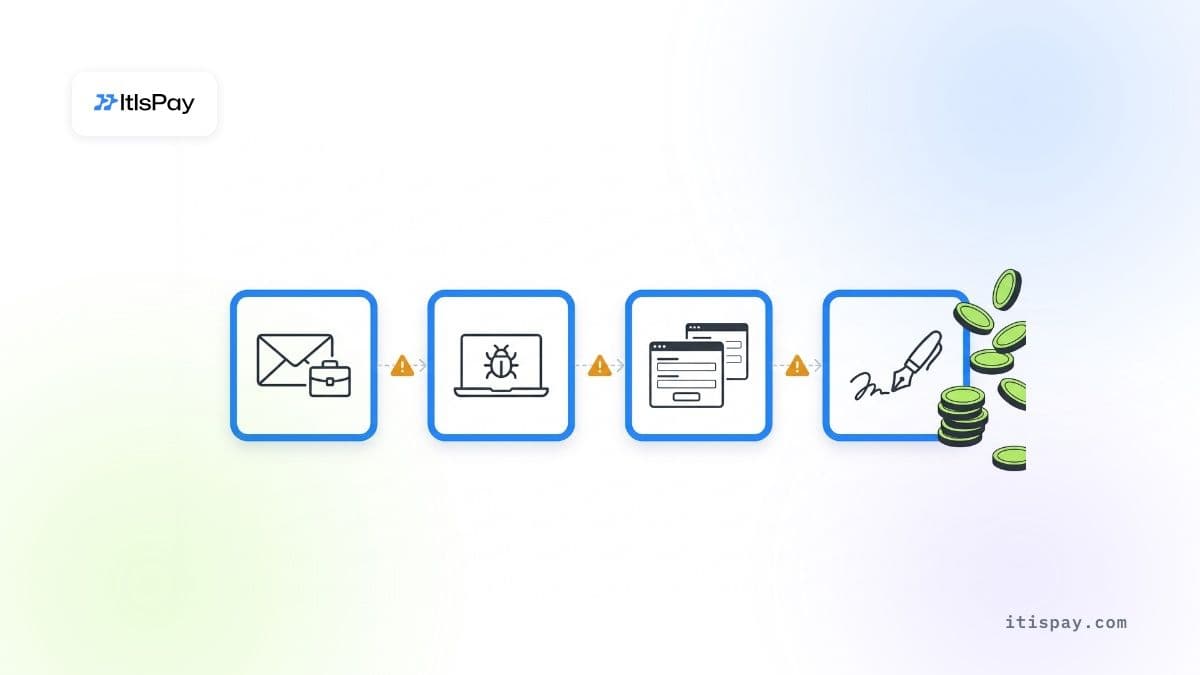
Every North Korea crypto hack in this article followed the same three steps: reach a person with access, reach the tool that builds or displays a transaction, and get valid signatures for a transfer the signers did not mean to approve. The cryptography stays intact. Chainalysis wrote in December 2025 that North Korean groups are "impersonating recruiters for prominent web3 and AI firms" and embedding IT workers inside crypto services to gain privileged access. Binance's case used the first route; earlier cases used the others.
Fake recruiters and test assignments#
The opening move is usually a job offer. At Binance, Engineer B received a fake interview and a "test assignment" repository. At DMM Bitcoin, according to the joint statement of the FBI, the US Defense Cyber Crime Center and Japan's National Police Agency of 23 December 2024, a North Korean actor posed as a recruiter on LinkedIn in March 2024 and sent an employee of the Japanese wallet-software firm Ginco a "pre-employment test" on GitHub. FaceStealer, in the DOJ's 12 November release, adds deepfaked video calls with people the target already knows.
Tampered tools and suppliers#
Binance's first breach was a tampered package manager install. Bybit's was a supplier: the multisig wallet provider Safe said the theft came from "a compromised Safe{Wallet} developer machine resulting in the proposal of a disguised malicious transaction". Investigators at Sygnia, whose findings Bybit's chief executive published, found no sign of compromise in Bybit's own infrastructure.
Insiders on the payroll#
The FBI warned on 13 October 2026 that North Korea uses "thousands of state-controlled remote 'IT Workers'" to infiltrate western companies, and that the regime "receives an estimated 85-90% of the revenue the actors generate." On a crypto desk, a remote contractor with admin rights sits one step from the keys. Vet them that way.
What do Bybit, WazirX and DMM Bitcoin show about signing?#
In all three cases, the people who approved the transfer saw a screen or request that did not show what was really being signed. Bybit and WazirX had multi-signature wallets. For a bank, the lesson is narrow. A second signer helps only if they check something the attacker cannot rewrite.
Bybit, 21 February 2025. The FBI attributes the theft of "approximately $1.5 billion USD in virtual assets" to North Korea (PSA I-022625-PSA). Bybit's signers were moving funds from a multisig cold wallet to a hot wallet during a scheduled transfer. Sygnia found that "the malicious code which created the malicious transaction originated directly from Safe{Wallet}'s AWS Infrastructure." The code ran only under certain conditions, so the signers saw a normal transfer and signed a different one.
DMM Bitcoin, May 2024. The FBI and Japan's police say TraderTraitor stole 4,502.9 BTC, about $308m at the time. After the Ginco employee was compromised, the attackers "likely used this access to manipulate a legitimate transaction request by a DMM employee." The request came through a legitimate channel, so it looked normal to those who approved it.
WazirX, July 2024. The Indian exchange lost more than $230m from a multisig wallet run with its custody provider Liminal. WazirX said, as reported at the time, that the data shown in the interface did not match the actual transaction. Liminal said its own servers were not breached. The two companies still disagree about the cause, so treat the details as unsettled. Both accounts describe signers approving a transaction they could not see in full.
Binance fits the pattern from another angle. The attacker did not fool a human signer on screen; it reached the signing service itself and started transactions "outside the normal withdrawal process", in Binance's words. Binance has not said where its limits and allowlists sat. The general rule still holds: controls that live inside the service an attacker reaches can be switched off with it.
How much has North Korea stolen in crypto since 2024?#
Before Binance, the largest single year was 2025. Chainalysis counted at least $2.02bn stolen by North Korean groups in 2025, $681m more than in 2024, with Bybit the largest share. The Multilateral Sanctions Monitoring Team, set up after the UN panel of experts ended, estimated $2.8bn stolen between January 2024 and September 2025. TRM Labs counted about $643m in the first half of 2026, about 66% of all crypto hack losses in that period. Binance alone, at more than $6bn per DOJ, is larger than all of these.
For a bank, this means the attacker is a state with a revenue target. It is patient, too: the Binance operation began in June.
What do MiCA and DORA require of a bank that holds keys?#
A bank that keeps crypto for clients in the EU holds the keys under both MiCA and DORA, and both make the signing path its problem. Banks enter through MiCA Article 60(1): a credit institution "may provide crypto-asset services if it notifies" its home authority "at least 40 working days before providing those services for the first time." Our guide to crypto custody for banks under MiCA covers that route.
Once inside, three rules apply:
- MiCA Article 75(3): the custody policy "shall minimise the risk of a loss of clients' crypto-assets or the rights related to those crypto-assets or the means of access to the crypto-assets due to fraud, cyber threats or negligence."
- MiCA Article 75(8): the provider is liable for losses "as a result of an incident that is attributable to them", capped at market value at the time of loss. In our reading, a compromised internal signing service is inside the provider's operations, so the carve-out for events outside its control is hard to use.
- DORA, applying since 17 January 2025: Article 9(4)(d) requires "protection measures of cryptographic keys"; Article 28(1)(a) says firms using ICT suppliers "remain fully responsible"; Article 5(2)(a) puts ultimate responsibility for ICT risk on the management body.
Supervisors are already looking. On 8 July 2026 ESMA launched a common supervisory action on CASPs' digital operational resilience, with an emphasis on custody, naming "key and storage management" and "transaction controls" among the topics.
Which signing controls stop a North Korea crypto hack?#
A control helps only if it sits outside the system the attacker is most likely to reach. Ask of each one: if the wallet engineer's laptop and the signing screen are compromised, does it still hold? More on choosing between own and outsourced custody is in our piece on the Binance hack and self-custody.
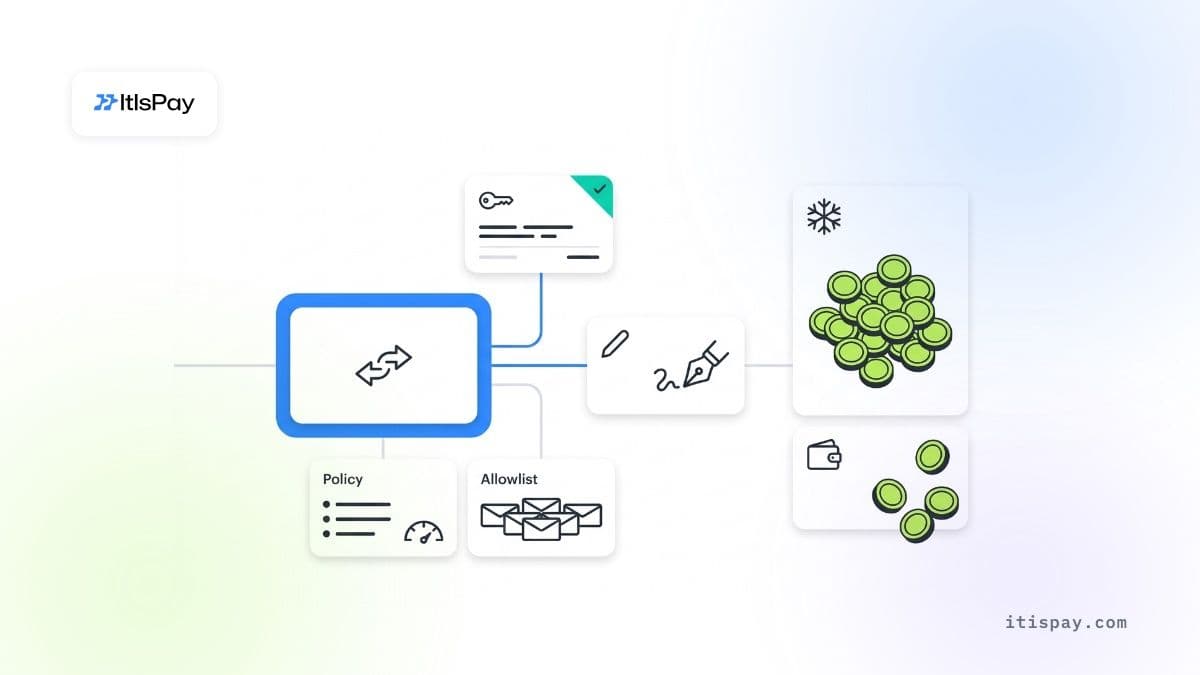
| Control | What it stops | What it misses | Verdict |
|---|---|---|---|
| Second signer on the same screen | A single rogue employee | A tampered screen shows both signers the same lie | No |
| Second signer checking the raw transaction on a separate device | Bybit-style display tricks | Collusion, or a compromised second device | Works |
| Address allowlist enforced by a separate policy system | Transfers to new attacker addresses | Delegation tricks like EIP-7702 if not covered by policy | Depends |
| Hourly and daily value limits outside the signing service | A full drain in minutes | Slow theft under the limit | Works |
| Most funds in cold storage, refilled on a schedule | Loss of the bulk in one event | Attacks during the scheduled refill, as at Bybit | Depends |
| MPC or multisig key split alone | Theft of a single key | A compromised request path | No |
| Hiring and device rules for wallet staff | Fake recruiters, test repositories, outside code | Supplier compromise | Depends |
Where signing rules do not help
- If limits and allowlists live in the same service the attacker reaches, they can be bypassed along with it.
- Bitcoin, ether and XRP have no issuer to freeze them; once out, recovery depends on exchanges catching the funds.
- A court order or a frozen stablecoin balance works after the loss. Under MiCA Article 75(8), the custodian carries the loss first.
What should a bank check this week?#
Each check maps to a step of the North Korea crypto hack playbook that has already worked against a real company.
- Ask whether anyone on the wallet or signing team has run a recruiter's "test assignment" or unvetted code on a work machine this year.
- Check that wallet staff use managed devices, with no packages installed from outside an approved mirror.
- Test the second signer: can they read the destination, amount and contract call of the raw transaction on a separate device, without the main wallet screen?
- Confirm that limits and allowlists are enforced by a system the signing service cannot change, and that EIP-7702-type delegations are blocked by policy.
- Pin or self-host every supplier front end used for signing, and get an alert when its code changes.
- Screen deposits daily against the FBI's TraderTraitor addresses and the address list in the Binance court order.
- Check identity again for remote contractors with admin rights, using the FBI's October 2026 advice on IT workers.
Software for crypto inside the bank's perimeter#
Banks and PSPs use ItisPay to add crypto acceptance for their merchants as a new payment channel. The platform installs inside the bank's own infrastructure, so data and logs stay in its perimeter, staff access follows the four-eyes rule, and the bank receives the source code. Keys to customer funds sit with our EU-licensed CASP + Payment Institution partner, which also handles licensing, KYC and settlement in EUR.
This article is for informational purposes only and does not constitute legal or regulatory advice.