A CASP license in Lithuania is now the only way to offer crypto-asset services from the country. The Bank of Lithuania grants it sparingly. The transition period ended with 2025. The ESMA interim MiCA register, read on 12 November 2026, lists four firms with a full CASP authorisation from the Bank. Three more offer crypto services through a notification under a licence they already hold.
The rules themselves are EU rules. A CASP (crypto-asset service provider) is authorised under MiCA, the EU Markets in Crypto-Assets Regulation. The same articles apply in Vilnius as in Paris or Frankfurt. What is Lithuanian is the supervisor and its queue. Below: who needs the licence, what the Bank checks, how long the review takes and what drives the cost.
Key moments
In short
- Lithuania chose a 12-month MiCA transition, so the old VASP registration stopped covering crypto services at the end of 2025. Without a CASP authorisation or a valid notification, a firm may not serve clients.
- The ESMA register (file read 12 November 2026) lists four full CASP authorisations in Lithuania and three Article 60 notifications.
- MiCA gives the Bank 25 working days to check that a file is complete and 40 working days to decide on a complete file. Preparation usually takes longer than the review.
- Minimum capital is EUR 50,000, 125,000 or 150,000 by service class, or a quarter of last year's fixed overheads if that is higher.
Who needs a CASP license in Lithuania today?#
Any firm that serves crypto clients from Lithuania needs a CASP authorisation. Firms that already hold certain EU financial licences may file a notification instead. MiCA Article 59 allows only these two routes.
The transition is over. MiCA Article 143(3) let firms already operating under national law continue until 1 July 2026 at the latest. Each country could set a shorter period. According to ESMA's list of grandfathering periods, Lithuania chose 12 months. The window opened on 30 December 2024 and closed at the end of 2025. The old crypto license in Lithuania, a registration as a virtual asset service provider, no longer covers anything.
The notification route under Article 60 is narrower than many firms assume. Banks, investment firms, securities depositories, market operators, fund managers and e-money institutions (EMIs) can use it. They notify the Bank at least 40 working days before they start. But the scope follows the licence they already hold. An EMI, for example, may only offer custody and transfer services for the e-money tokens it issues itself. An EMI that wants to swap crypto for euros or hold clients' bitcoin needs full authorisation, like any newcomer.
For the general MiCA picture beyond Lithuania, see our guide to CASP licence requirements.
How many CASP licenses has Lithuania granted?#
Four full authorisations, as of the ESMA interim MiCA register file read on 12 November 2026. Three other Lithuanian firms appear in the register under Article 60 notifications, not authorisations.
| Firm (register name) | Route | Date in register | Services |
|---|---|---|---|
| Robinhood Europe, UAB | Article 63 authorisation | 29 May 2025 | Custody, order execution, reception and transmission of orders, transfers |
| UAB Decentralized (CoinGate) | Article 63 authorisation | 16 Dec 2025 | Custody, exchange for funds and for crypto, transfers |
| Nuvei Liquidity UAB | Article 63 authorisation | 16 Dec 2025 | Custody, exchange for funds and for crypto, transfers |
| UAB Micar assets | Article 63 authorisation | 26 Feb 2026 | Custody, exchange, order execution and transmission, transfers |
| UAB BLUE EMI LT | Article 60 notification (EMI) | 13 May 2025 | Custody of its own e-money token |
| Newrails, UAB | Article 60 notification (EMI) | 14 Nov 2025 | Custody and transfer of its own e-money token |
| UAB DriveWealth Europe | Article 60 notification (investment firm) | 9 Nov 2026 | Custody, order execution and transmission |
All four authorised firms provide custody, which puts them in class 2 or above. None may run a trading platform. The register also notes that three of the four also hold a payment licence for operations with e-money tokens. Firms that plan to move stablecoins such as EURC or USDC for clients should budget for that second authorisation too.
Demand was far larger than the number of grants. In January 2026 Fintech Baltic reported that 55 companies filed 102 MiCA applications in 2025. The figures came from the Bank of Lithuania, as presented by lawyer Giedrius Būdvytis. Lithuanian broadcaster LRT reported on 2 March 2026 that Micar assets received the fourth licence.
What does the Bank of Lithuania check in a CASP application?#
The Bank checks the file against MiCA Title V. It looks for real management in the EU, enough capital, fit people and owners, and working controls. The list of what an application must contain is fixed in Article 62(2), so the question is less "what to submit" than "how convincing it is".
Substance and people#
Article 59(2) sets three conditions. The registered office must be in a member state where the firm provides some of its services. Management must sit in the EU. At least one director must live in the EU. Recital 74 of MiCA explains why supervisors care:
"Regular close direct contact between supervisors and the responsible management of crypto-asset service providers should be an essential element of such supervision."
In practice, the people who take key decisions must sit in the EU and answer the supervisor's calls. A nominee director fronting for a group in another time zone will not do. The registered office must be in Lithuania if Lithuania is the home country. Directors must show good repute and the skills and experience to run the business. Shareholders with qualifying holdings must show good repute and no relevant criminal record (Article 62(3)).
Capital#
Article 67 sets the floor. A CASP must hold the higher of the Annex IV minimum or a quarter of last year's fixed overheads. Safeguards can be own funds, an insurance policy or a mix of both. A new firm uses its projected overheads for the first 12 months (Article 67(2)).
| Class | Services that put you in it | Minimum (MiCA Annex IV) |
|---|---|---|
| Class 1 | Order execution, placing, transfers, reception and transmission of orders, advice, portfolio management | EUR 50,000 |
| Class 2 | Class 1 services plus custody, or exchange of crypto for funds or for other crypto | EUR 125,000 |
| Class 3 | Class 2 services plus operating a trading platform | EUR 150,000 |
A broker or payment firm that holds client assets is in class 2. All four Lithuanian authorisations so far sit there.
The application file#
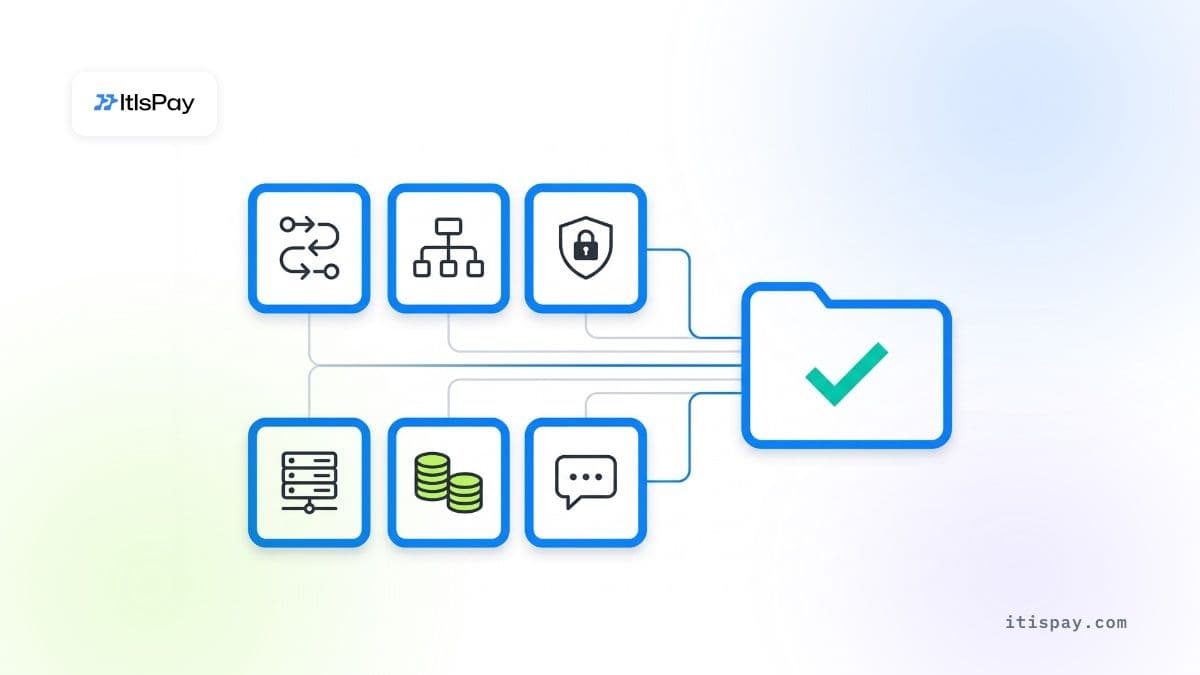
Article 62(2) lists the content. The parts that take the most work are:
- A programme of operations: which services, for which clients, in which countries, marketed how.
- Governance arrangements and internal control mechanisms, including the AML and counter-terrorist financing framework.
- Technical documentation of ICT systems and security, plus a plain-language description of it.
- The procedure for keeping clients' crypto-assets and funds separate from the firm's own.
- Complaints handling, and a custody policy if the firm will hold client assets.
- Fit-and-proper evidence for each director and qualifying shareholder.
How long does CASP authorisation in Lithuania take?#
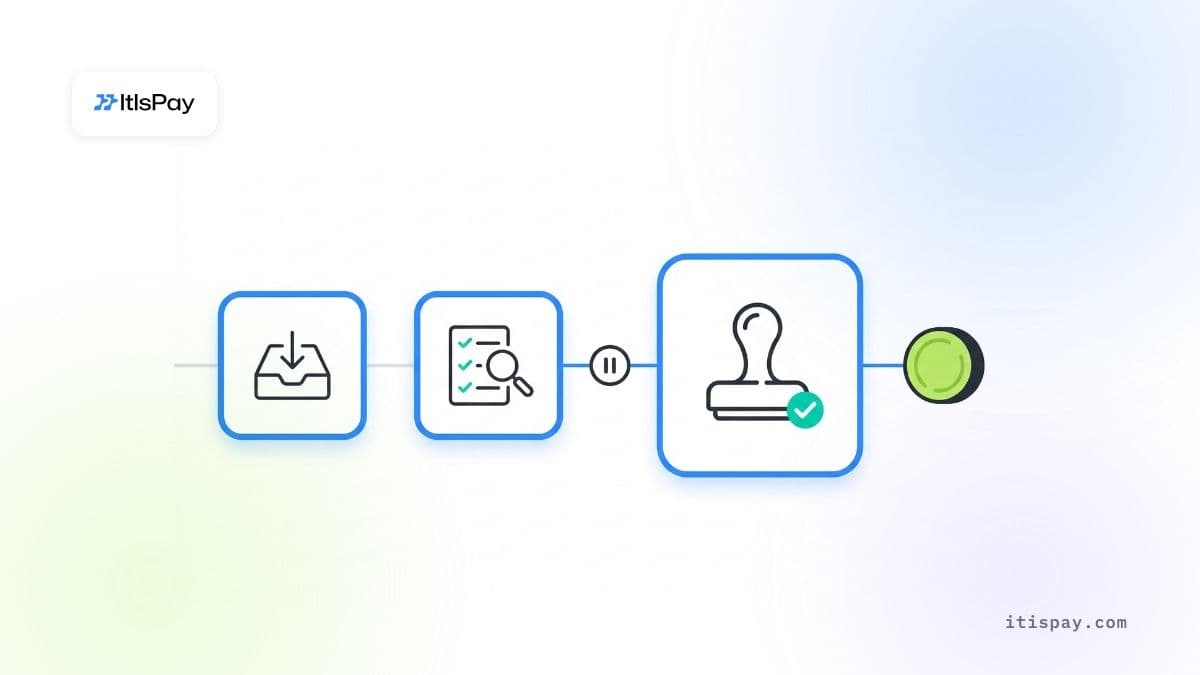
On paper, up to 65 working days from submission, about 13 weeks: 25 to check that the file is complete, then 40 to decide. MiCA Article 63 sets the clock, and the Bank of Lithuania follows it as the competent authority.
| Stage | MiCA rule | Time limit |
|---|---|---|
| Acknowledgement of receipt | Art. 63(1) | 5 working days |
| Completeness check | Art. 63(2) | 25 working days |
| Missing information | Art. 63(2) | Deadline set by the Bank |
| Assessment and decision | Art. 63(9) | 40 working days from a complete file |
| One request for more information | Art. 63(12) | By day 20, pauses the clock up to 20 working days |
| Notice of the decision | Art. 63(9) | 5 working days |
Add those up and a clean file takes 65 working days from submission to decision. It can reach 90 if the Bank pauses the clock and then takes five days to notify. The catch is the word "complete". The 40-day clock starts only when the Bank confirms the file is complete. Under Article 63(3) the Bank may refuse to review an application that is still incomplete after its deadline.
So the real timeline is set before filing. Policies must match how the business really runs. The AML officer and an EU-resident director must be hired. Client accounts must be set up and kept separate. All of that takes months. Firms that file a thin file to "get in the queue" usually lose time, not gain it.
What does a Lithuanian CASP license cost?#
The fixed part is capital: EUR 50,000, 125,000 or 150,000 by class, or a quarter of the previous year's fixed overheads if that is higher. The overheads test is reviewed every year. Once a quarter of your fixed costs passes the class minimum, every new hire raises the capital you must hold.
The larger cost is people and systems, which the Bank checks rather than prices:
- A management body with relevant experience, at least one director resident in the EU, and key decisions taken in the EU.
- An AML function with a named officer, transaction monitoring and Travel Rule tooling.
- ICT security that can be documented and tested, plus custody infrastructure if you hold client assets.
- Legal and audit work to prepare the file and answer the Bank's questions.
- A payment licence on top if you will handle e-money tokens for clients.
Ask the Bank whether a state fee applies and how much it is. Consultants quote different figures, and we could not confirm one on a primary source. For a breakdown of licence costs across EU countries, see our guide to CASP licence cost.
Why do CASP applications stall or get refused?#
An application can stall before anyone judges the business. If it stays incomplete after the Bank's deadline, the Bank may refuse to review it (Article 63(3)). Once the file is complete, Article 63(10) obliges the Bank to refuse where there are clear grounds that:
- The management body threatens sound and prudent management or exposes the firm to a serious risk of money laundering or terrorist financing.
- Members of the management body do not meet the repute and competence criteria of Article 68(1).
- Qualifying shareholders lack sufficiently good repute.
- The firm fails, or is likely to fail, any requirement of MiCA Title V.
The Bank must also refuse if a third country's laws block supervision of people closely linked to the applicant (Article 63(8)).
Where a Lithuanian licence does not help
- It does not cover issuing a stablecoin. Issuing e-money tokens needs a credit institution or EMI licence; asset-referenced tokens need their own authorisation.
- It does not cover moving e-money tokens as a payment service. The register shows authorised Lithuanian CASPs holding a separate payment licence for that.
- It can be withdrawn if unused. Under Article 64(1) the Bank must withdraw an authorisation not used within 12 months, or after nine consecutive months without services.
- It does not replace local rules in host countries for marketing, consumer protection and tax.
Is Lithuania the right MiCA home country?#
A MiCA license from Lithuania suits firms that want a hands-on supervisor and can put real management in the EU. It is a poor choice for anyone hoping a light presence will pass. It is also a small register: as of the 12 November 2026 file, ESMA lists 130 entries for Germany, 36 for France, 29 for the Netherlands and 7 for Lithuania, of which 4 are full authorisations.
Whichever country grants the licence, the passport works the same way. Under Article 65 the firm notifies its home authority of the countries and services it plans to cover. The authority forwards this to the host countries within 10 working days. The firm may start once it hears back, or at the latest on the 15th calendar day after it filed.
What should you do before you file?#
- Decide the services and the class. Custody or exchange means class 2 and EUR 125,000 at minimum.
- Check if Article 60 covers you. An EMI or investment firm may only need a notification for services that match its licence.
- Put substance in place first: EU-resident director, registered office in Lithuania, AML officer, segregated accounts.
- Write policies that describe how you actually operate, then test them against Article 62(2) line by line.
- Plan for e-money tokens: if clients will send or receive stablecoins through you, map the payment-licence question early.
Preparing a CASP application? Evda helps your team assemble the licence file and check it against MiCA before it reaches the Bank of Lithuania. Gaps then surface while they are still cheap to fix. If getting your own licence is not the right move yet, you can route through a licensed CASP + Payment Institution partner: ItisPay provides the software layer, and the partner holds the authorisation.
This article is for informational purposes only and does not constitute legal or regulatory advice.